> ## Documentation Index
> Fetch the complete documentation index at: https://docs.unleashx.ai/llms.txt
> Use this file to discover all available pages before exploring further.
# BigQuery
> Let your UnleashX agent run SQL queries and explore datasets and tables in Google BigQuery.
# BigQuery
> **In one line:** Connect Google BigQuery so your UnleashX agent can run SQL queries, browse datasets and tables, and pull analytics results — all in plain language.
| | |
| ------------------ | ------------------------------------------------------------------------------------------------------------------------------ |
| **Category** | Data & Analytics |
| **Authentication** | OAuth (Google) |
| **Setup time** | \~5 minutes |
| **Difficulty** | Medium |
| **Best for** | Data and analytics teams whose warehouse lives in BigQuery and who want an AI agent to query it and describe schemas on demand |
## 1. Overview
BigQuery is Google Cloud's serverless data warehouse. It stores your analytics data in **datasets** and **tables**, and runs fast SQL queries across huge volumes without any infrastructure to manage.
Once connected to UnleashX, your agent can run SQL against your BigQuery project, list datasets and tables, describe a table's schema, preview rows, and return query results. It works against your live project using your Google sign-in, so it acts with your own IAM permissions.
Connecting BigQuery to UnleashX turns your warehouse into something you can ask questions of in plain language. Instead of opening the BigQuery console to write a query, you tell your agent what you want to know and it runs the SQL and reports the answer.
## 2. What you'll need
* A Google Cloud project with **BigQuery** enabled, and its **project ID**.
* IAM permission to run queries and read the datasets you want the agent to access (typically **BigQuery Data Viewer** + **BigQuery Job User**, or **BigQuery User**).
* A Google account (or service account) with access to that project.
* An UnleashX account with access to **Data Connectors**.
No API key to paste. BigQuery uses Google OAuth — you click **Authorize** and sign in with Google. You'll also provide your **project ID**.
BigQuery bills for **bytes scanned** by queries. A broad `SELECT *` over a large table can be expensive. Have the agent select only the columns and date ranges it needs, and consider setting a **maximum bytes billed** limit in your project.
## 3. Get your credentials
BigQuery MCP authenticates with a **Google OAuth 2.0 access token** that has access to your project. The token is sent to Google's APIs as a Bearer credential.
Go to the [Google Cloud Console](https://console.cloud.google.com/) and select the project whose data you want to connect. Note its **Project ID** — you'll provide this to your agent.
Under **APIs & Services → Library**, make sure the **BigQuery API** is enabled for the project.
In **IAM & Admin**, confirm your account has at least **BigQuery Data Viewer** (read tables) and **BigQuery Job User** (run queries) on the project — or **BigQuery User**.
When connecting (Section 4), sign in with Google and grant the scopes below. UnleashX uses the resulting token as a Bearer credential and refreshes it automatically.
**Scopes UnleashX requests for BigQuery:**
| Scope | Why UnleashX needs it |
| ------------------------------------------------ | ---------------------------------------------------------- |
| `https://www.googleapis.com/auth/bigquery` | Run jobs (queries) and read datasets, tables, and results. |
| `https://www.googleapis.com/auth/cloud-platform` | Access the BigQuery project resources. |
| `https://www.googleapis.com/auth/userinfo.email` | Identify which account is connected. |
| `openid` | Sign-in / identity verification. |
Prefer read-only access? Grant `https://www.googleapis.com/auth/bigquery.readonly` (or the **BigQuery Data Viewer** + **Job User** roles without write access) so the agent can query and browse but not modify data.
## 4. Connect on UnleashX
Go to `https://www.tryunleashx.com` and open the agent you want to connect.
Inside the agent, go to **Data Connectors**.
Locate **BigQuery** and click **Connect** (or **Add** / **Configure**).
Click **Authorize**, sign in with Google, and grant the scopes. Enter your **Project ID** when prompted.
You return to UnleashX and the BigQuery connector shows a **Connected** badge.
### Use BigQuery in a Workflow
Once connected, you can add **BigQuery** to any automation from the **Workflows** builder. Its triggers and tools appear in the Apps panel, marked with an **MCP** badge.
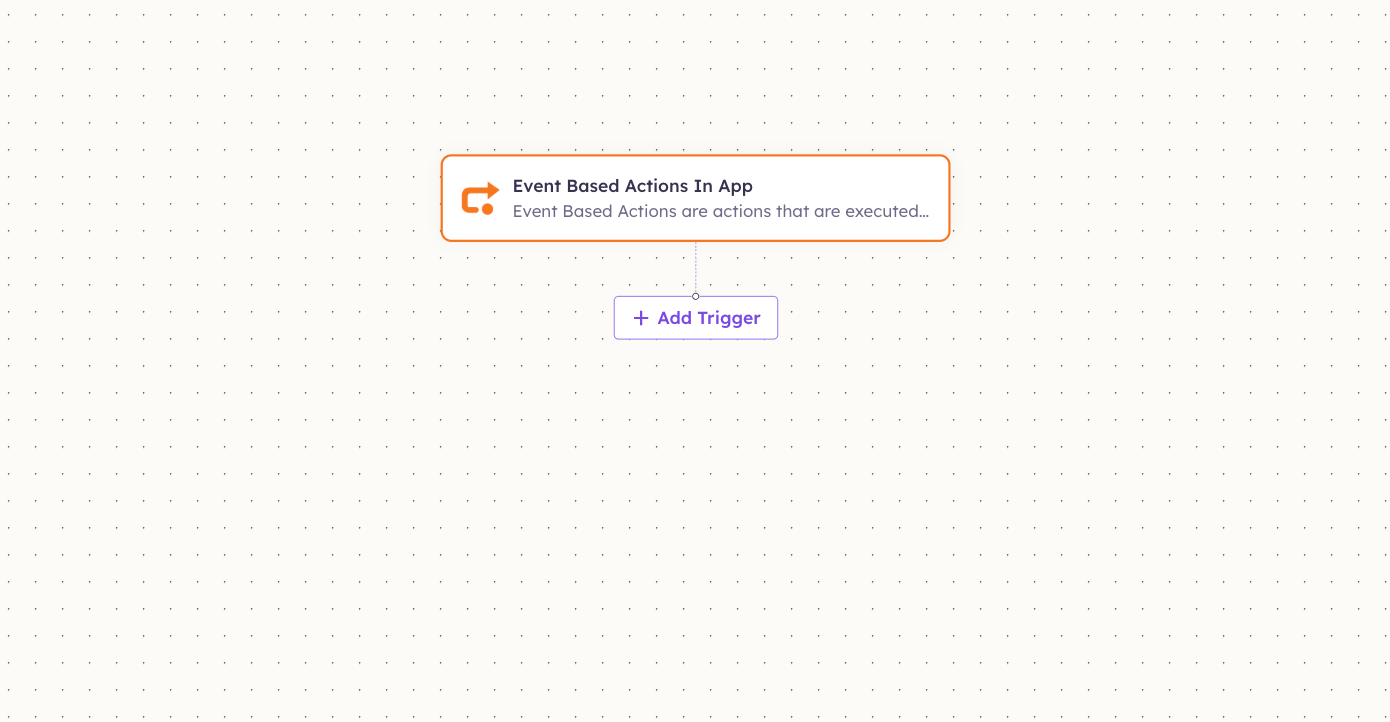
Open **Workflows → New Workflow**. On the canvas, click **+ Add Trigger** (or the **+** below any node) to add a step.
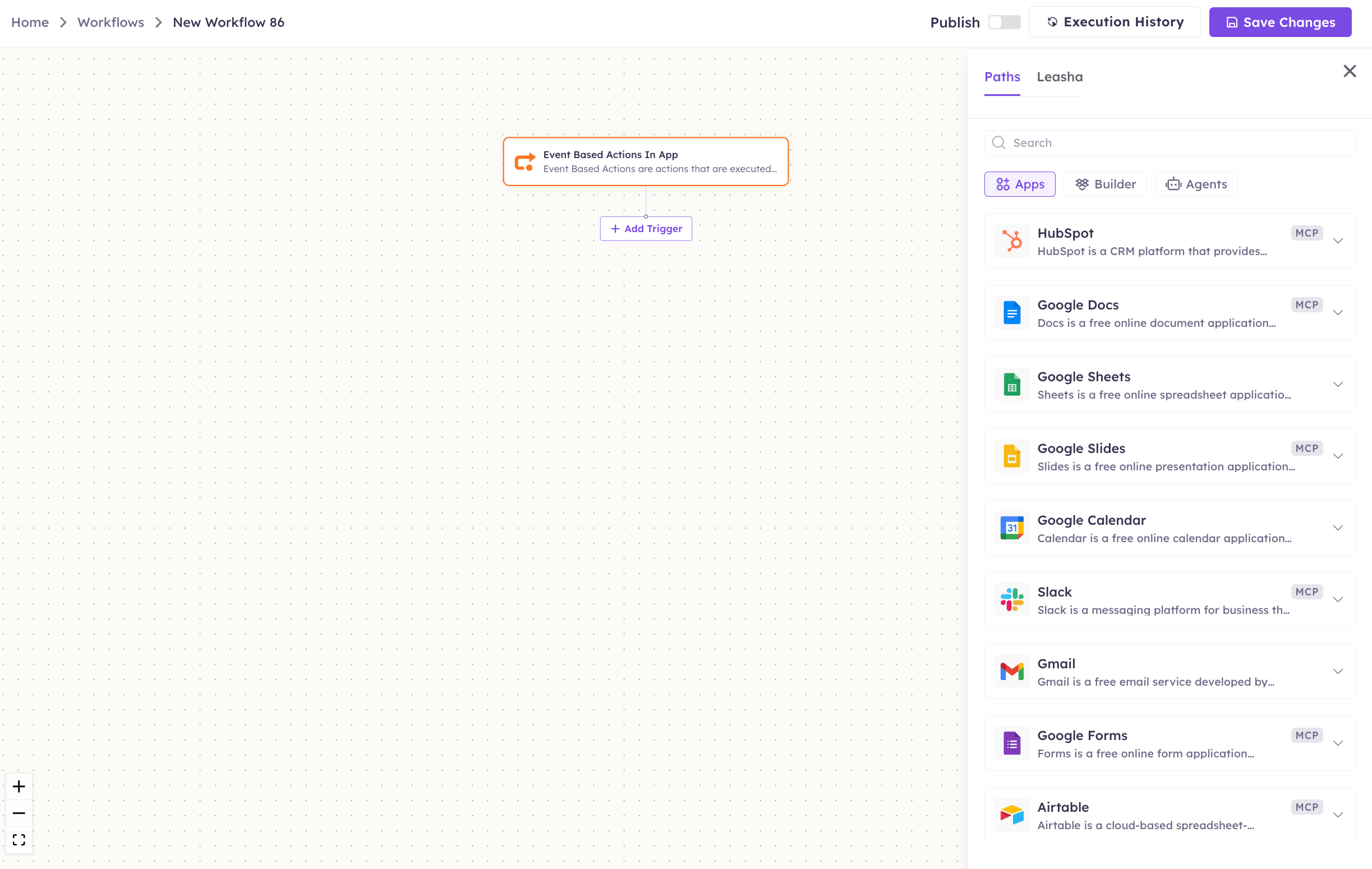
 In the **Paths** panel, open the **Apps** tab and select **BigQuery**. Use the search box if you have many connectors.
 Pick the action you want (for example, "run query"). Configure its fields — required fields are marked with a red asterisk (\*).
Under **Selected account**, choose an already-connected account, or click **Add Account** to connect one now.
Fill in the remaining fields and click **Save**. Use **Test** to verify the step, then toggle **Publish** when the workflow is ready.
The steps are the same for every connector. For the full workflow builder guide, see [Using MCP in Workflows](/mcp/workflows).
## 5. Available tools
| Tool | What it does | Changes data? |
| ----------------- | ----------------------------------------------------------------- | ---------------- |
| Run Query | Runs a SQL query and returns the results. | Depends on SQL\* |
| Get Query Results | Fetches the results of a completed query job. | No |
| Dry Run Query | Validates a query and estimates bytes scanned without running it. | No |
| List Datasets | Lists datasets in the project. | No |
| Get Dataset | Retrieves a dataset's metadata. | No |
| List Tables | Lists tables in a dataset. | No |
| Get Table | Describes a table's schema and metadata. | No |
| Preview Table | Returns a sample of rows from a table (`tabledata.list`). | No |
| List Jobs | Lists recent query jobs in the project. | No |
| Get Job | Retrieves a job's status and statistics. | No |
| Create Dataset | Creates a new dataset. | ✏️ Yes |
| Create Table | Creates a new table. | ✏️ Yes |
| Insert Rows | Streams rows into a table. | ✏️ Yes |
| Delete Table | Deletes a table. | ⚠️ Yes |
\*Read-only `SELECT` queries don't change data. If you run DML (`INSERT`/`UPDATE`/`DELETE`/`MERGE`) or DDL, **Run Query can modify data** — connect with read-only scope/roles to keep the agent limited to queries.
## 6. Example usage
**"What was our total revenue by month this year? Query analytics.sales."**
→ Runs Run Query with a `SELECT … GROUP BY month` against `analytics.sales` and returns the monthly totals.
**"List the tables in the events dataset and show me the schema of page\_views."**
→ Runs List Tables on `events`, then Get Table on `page_views` to return its columns and types.
## 7. Permissions & data access
**UnleashX can:**
* Run SQL queries and fetch their results.
* Dry-run queries to estimate cost before running them.
* List and describe datasets and tables, and preview rows.
* List and inspect query jobs — all subject to your IAM permissions.
**UnleashX cannot:**
* Access datasets or tables your account isn't granted in IAM.
* Query a project other than the one you configured.
* Manage IAM, billing, or project-level Google Cloud settings.
**To disconnect:** In UnleashX, open **Data Connectors → BigQuery → Disconnect**. You can also revoke access at `https://myaccount.google.com/permissions` (Google account → Third-party access). Disconnecting revokes access immediately.
## 8. Troubleshooting
| Problem | What it means | How to fix it |
| --------------------------------------- | ---------------------------------------------------------------- | ---------------------------------------------------------------------------- |
| **401 Unauthorized** | The Google token expired or was revoked. | Reconnect BigQuery in **Data Connectors** and sign in again. |
| **403 Access Denied** | Your account lacks the IAM role for that dataset or to run jobs. | Ask a project admin for **BigQuery Data Viewer** + **Job User**, then retry. |
| **404 Not found: Dataset/Table** | The dataset/table name or project is wrong. | Verify the fully-qualified name `project.dataset.table` and your project ID. |
| **Query exceeded quota / bytes billed** | The query scanned more than the allowed bytes. | Add filters/column selection, or raise the maximum-bytes-billed limit. |
| **Wrong project** | The agent is querying a different project. | Reconnect and enter the correct Project ID. |
For general MCP issues, see [/mcp/integrations](/mcp/integrations).
## 9. Frequently asked questions
**Is my data stored by UnleashX?**
No. UnleashX runs queries and reads metadata live through the BigQuery API per request; it doesn't copy your tables.
**Will queries cost money?**
BigQuery bills by bytes scanned. Use Dry Run Query to estimate cost first, and select only the columns and date ranges you need.
**Can the agent modify data?**
Only if your account has write access and you run DML/DDL. Connect with read-only scope or roles for a query-only agent.
**Can I use a service account instead?**
Yes — for automation, a service account with least-privilege BigQuery roles is often preferable to an individual Google login.
## 10. References
* BigQuery REST API reference: [https://cloud.google.com/bigquery/docs/reference/rest](https://cloud.google.com/bigquery/docs/reference/rest)
* Running queries: [https://cloud.google.com/bigquery/docs/running-queries](https://cloud.google.com/bigquery/docs/running-queries)
* BigQuery IAM roles: [https://cloud.google.com/bigquery/docs/access-control](https://cloud.google.com/bigquery/docs/access-control)
* Controlling query cost: [https://cloud.google.com/bigquery/docs/best-practices-costs](https://cloud.google.com/bigquery/docs/best-practices-costs)
Pick the action you want (for example, "run query"). Configure its fields — required fields are marked with a red asterisk (\*).
Under **Selected account**, choose an already-connected account, or click **Add Account** to connect one now.
Fill in the remaining fields and click **Save**. Use **Test** to verify the step, then toggle **Publish** when the workflow is ready.
The steps are the same for every connector. For the full workflow builder guide, see [Using MCP in Workflows](/mcp/workflows).
## 5. Available tools
| Tool | What it does | Changes data? |
| ----------------- | ----------------------------------------------------------------- | ---------------- |
| Run Query | Runs a SQL query and returns the results. | Depends on SQL\* |
| Get Query Results | Fetches the results of a completed query job. | No |
| Dry Run Query | Validates a query and estimates bytes scanned without running it. | No |
| List Datasets | Lists datasets in the project. | No |
| Get Dataset | Retrieves a dataset's metadata. | No |
| List Tables | Lists tables in a dataset. | No |
| Get Table | Describes a table's schema and metadata. | No |
| Preview Table | Returns a sample of rows from a table (`tabledata.list`). | No |
| List Jobs | Lists recent query jobs in the project. | No |
| Get Job | Retrieves a job's status and statistics. | No |
| Create Dataset | Creates a new dataset. | ✏️ Yes |
| Create Table | Creates a new table. | ✏️ Yes |
| Insert Rows | Streams rows into a table. | ✏️ Yes |
| Delete Table | Deletes a table. | ⚠️ Yes |
\*Read-only `SELECT` queries don't change data. If you run DML (`INSERT`/`UPDATE`/`DELETE`/`MERGE`) or DDL, **Run Query can modify data** — connect with read-only scope/roles to keep the agent limited to queries.
## 6. Example usage
**"What was our total revenue by month this year? Query analytics.sales."**
→ Runs Run Query with a `SELECT … GROUP BY month` against `analytics.sales` and returns the monthly totals.
**"List the tables in the events dataset and show me the schema of page\_views."**
→ Runs List Tables on `events`, then Get Table on `page_views` to return its columns and types.
## 7. Permissions & data access
**UnleashX can:**
* Run SQL queries and fetch their results.
* Dry-run queries to estimate cost before running them.
* List and describe datasets and tables, and preview rows.
* List and inspect query jobs — all subject to your IAM permissions.
**UnleashX cannot:**
* Access datasets or tables your account isn't granted in IAM.
* Query a project other than the one you configured.
* Manage IAM, billing, or project-level Google Cloud settings.
**To disconnect:** In UnleashX, open **Data Connectors → BigQuery → Disconnect**. You can also revoke access at `https://myaccount.google.com/permissions` (Google account → Third-party access). Disconnecting revokes access immediately.
## 8. Troubleshooting
| Problem | What it means | How to fix it |
| --------------------------------------- | ---------------------------------------------------------------- | ---------------------------------------------------------------------------- |
| **401 Unauthorized** | The Google token expired or was revoked. | Reconnect BigQuery in **Data Connectors** and sign in again. |
| **403 Access Denied** | Your account lacks the IAM role for that dataset or to run jobs. | Ask a project admin for **BigQuery Data Viewer** + **Job User**, then retry. |
| **404 Not found: Dataset/Table** | The dataset/table name or project is wrong. | Verify the fully-qualified name `project.dataset.table` and your project ID. |
| **Query exceeded quota / bytes billed** | The query scanned more than the allowed bytes. | Add filters/column selection, or raise the maximum-bytes-billed limit. |
| **Wrong project** | The agent is querying a different project. | Reconnect and enter the correct Project ID. |
For general MCP issues, see [/mcp/integrations](/mcp/integrations).
## 9. Frequently asked questions
**Is my data stored by UnleashX?**
No. UnleashX runs queries and reads metadata live through the BigQuery API per request; it doesn't copy your tables.
**Will queries cost money?**
BigQuery bills by bytes scanned. Use Dry Run Query to estimate cost first, and select only the columns and date ranges you need.
**Can the agent modify data?**
Only if your account has write access and you run DML/DDL. Connect with read-only scope or roles for a query-only agent.
**Can I use a service account instead?**
Yes — for automation, a service account with least-privilege BigQuery roles is often preferable to an individual Google login.
## 10. References
* BigQuery REST API reference: [https://cloud.google.com/bigquery/docs/reference/rest](https://cloud.google.com/bigquery/docs/reference/rest)
* Running queries: [https://cloud.google.com/bigquery/docs/running-queries](https://cloud.google.com/bigquery/docs/running-queries)
* BigQuery IAM roles: [https://cloud.google.com/bigquery/docs/access-control](https://cloud.google.com/bigquery/docs/access-control)
* Controlling query cost: [https://cloud.google.com/bigquery/docs/best-practices-costs](https://cloud.google.com/bigquery/docs/best-practices-costs)